
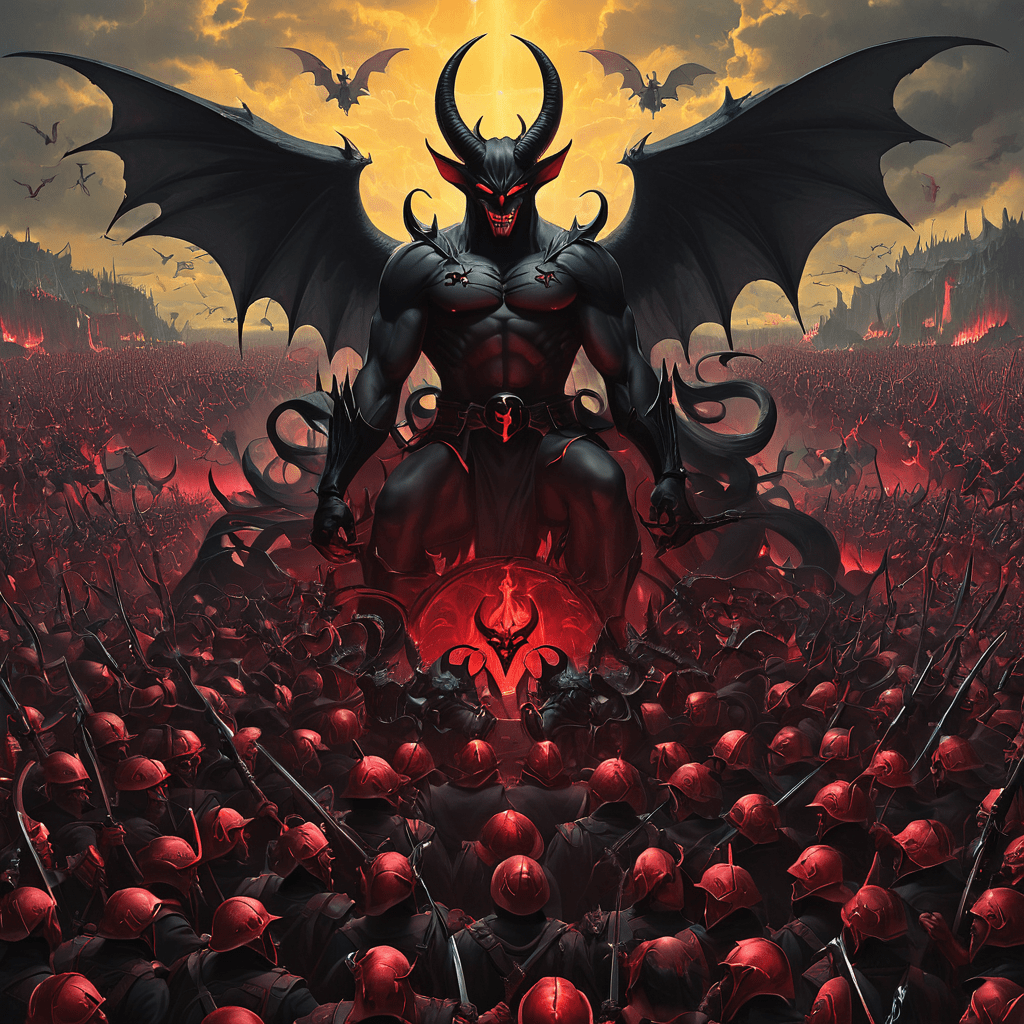
Although scholars debate the timing of when the Book of Joel was written, the book likely had two timeframes in view of what scholars call a near/far prophetic application. The near-term application can be understood in light of a recent plague of locusts. Joel compares the destruction the locust caused, to an upcoming army he sees in a vision that will invade Israel and Judah. His far-term application relates to The Day of the Lord, an eschatological (End Times) reference to the Great Tribulation Period just before the Second Coming of Christ. Let’s look at Joel more closely to see what he might be referring to.
Immediate application
According to Wikipedia “Some commentators suggest that Joel lived in the 9th century BCE,[1] whereas others assign him to the 5th or 4th century BCE.”. The early dating leaves room to see Joel warning of the coming Babylonian invasion beginning in 606/5 B.C. His references to the Temple and its practices (Joel 1:9, 2:1 etc..) point to the warning being for the Southern Kingdom (the area of Jerusalem and its surroundings). However, if Joel did prophesy during the 800’s B.C. timeframe, the Assyrian invasion of the Northern Kingdom (722 B.C.) may also be in view. The near-term prophecy is often the “little brother” in terms of effect as compared to the far-term application which we will look at next.
Far-term application
Joel 1 locust compared to The Day of the Lord
Joel begins his writing with an analogy between a recent locust invasion in which the stages of the locust growth lead to higher levels of devastation for the land:
Joe 1:4 What the cutting locust left, the swarming locust has eaten. What the swarming locust left, the hopping locust has eaten, and what the hopping locust left, the destroying locust has eaten.
Next, Joel equates that destruction from locust to a future invasion from an army:
Joe 1:6 For a nation has come up against my land, powerful and beyond number; its teeth are lions’ teeth, and it has the fangs of a lioness.
Joe 1:7 It has laid waste my vine and splintered my fig tree; it has stripped off their bark and thrown it down; their branches are made white.
These early references to complete destruction from an army potentially coming in stages as the locust were referenced in stages of their growth, sets the storyline for what Joel is trying to communicate. The invasion army of the future is what he is warning about prophetically.
In the fifteenth verse of the first chapter, Joel is already making reference to the far-term application.
Joe 1:15 Alas for the day! For the day of the LORD is near, and as destruction from the Almighty it comes.
Notice Joel’s timeframe for the invasion has changed. Not only does he use the specific phrase “Day of the Lord” which is referenced specifically 18 times in the Bible (over 200 times using other variations as well), but he also is telling us that what is coming is “destruction from the Almighty”. The destruction coming from the Almighty fits the end-times work of the Lord (Revelation 6:16-17) and seems to point away from any pending destruction coming from a foreign army. Notice too that Joel says:
Joe 1:19 To you, O LORD, I call. For fire has devoured the pastures of the wilderness, and flame has burned all the trees of the field.
In 2 Peter 3:7 Peter ties the destruction by fire to the “day of judgment” or Tribulation period.
2Pe 3:7 But by the same word the heavens and earth that now exist are stored up for fire, being kept until the day of judgment and destruction of the ungodly.
This future-looking reference to an end-times army then is the topic that Joel has for the rest of his Book. Next, let’s look at where this end-times army fits into God’s program.
Joel 2 – Gog/MaGog parallels up to The Day of the Lord
Joel chapter 2 continues the far-term application. We see in the first two verses another reference to the Day of the Lord being near:
Joe 2:1 Blow a trumpet in Zion; sound an alarm on my holy mountain! Let all the inhabitants of the land tremble, for the day of the LORD is coming; it is near,
Joe 2:2 a day of darkness and gloom, a day of clouds and thick darkness! Like blackness there is spread upon the mountains a great and powerful people; their like has never been before, nor will be again after them through the years of all generations.
Here in Joel 2, we see the army Joel warned about in Chapter 1. He is now describing them in a similar language he used before about the locust invasion in Chapter 1. The question is now, which army is this in the end times? The Bible generally uses multiple references to the same people, place, or thing to confirm a prophecy. Each mention typically adds additional detail when they are compared. Pastor Chuck Smith of Calvery Chapel fame, mentioned in one of his commentaries, that Joel’s army is described in a similar fashion in Ezekiel 38-39. In Ezekiel, many Bible prophecy students will recognize that these chapters offer a famous end times battle description. Below is a comparison chart of similar descriptions between the two books:
Scholars like Dr. Ice and Tim LaHaye studying the famous Ezekiel 38-39 war place the timing of this war among the events leading up to the Day of the Lord:
“The next view, which is the one I hold at this time, is that it will happen after the rapture but before the tribulation. It will be during the interval of days, weeks, months or years between the rapture and the start of the seven-year tribulation.”
This timing makes the most sense to me as well for a number of reasons, but specifically, here we can see in the text of these chapters both prophets see the invasion with the Day of the Lord approaching and placing that in the “latter years”
Eze 38:8 After many days thou shalt be visited: in the latter years thou shalt come into the land that is brought back from the sword, and is gathered out of many people, against the mountains of Israel, which have been always waste: but it is brought forth out of the nations, and they shall dwell safely all of them.
Joe 1:15 Alas for the day! for the day of the LORD is at hand, and as a destruction from the Almighty shall it come.
In a recent post, I also argued that at the end of these same verses, we can see the beginning of the Day of the Lord which helps to confirm Dr. Ice and Mr. LaHaye’s timing assertion.
Joe 2:31 The sun shall be turned into darkness, and the moon into blood, before the great and the terrible day of the LORD come.
Rev 6:17 for the great day of their wrath has come, and who can stand?”
Joel’s army in Joel chapter 2 appears on the prophetic scene just before the Day of the Lord begins.
What are they??
Let’s look at one more curious description of the army that is coming:
Joe 2:4 Their appearance is like the appearance of horses, and like war horses they run.
Joe 2:5 As with the rumbling of chariots, they leap on the tops of the mountains, like the crackling of a flame of fire devouring the stubble, like a powerful army drawn up for battle.
Joe 2:6 Before them peoples are in anguish; all faces grow pale.
Joe 2:7 Like warriors they charge; like soldiers they scale the wall. They march each on his way; they do not swerve from their paths.
Joe 2:8 They do not jostle one another; each marches in his path; they burst through the weapons and are not halted.
Joe 2:9 They leap upon the city, they run upon the walls, they climb up into the houses, they enter through the windows like a thief.
Joe 2:10 The earth quakes before them; the heavens tremble. The sun and the moon are darkened, and the stars withdraw their shining.
Something is very strange about this army. Is it human? According to the ESV translation, in Joel 2:4 their “appearance is of horses”! In Joel 2:8, “they burst through the weapons and are not halted.”. In the KJV of that same verse “and when they fall upon the sword, they shall not be wounded. ” It is hard to say what exactly Joel is witnessing about this army other than they must not be completely human. Are they spiritual? Robotic? Genetically engineered?
Two of the Seal judgments in Revelation chapter 6 could be identified as the War of Gog of MaGog described in Ezekiel 38-39 above. Seal 2 is opened in Revelation 6:3-4. This is a rider on a red horse who brings war to the world. Seal 4 is also a candidate for this war being described in Revelation 6. In verses Revelation 6:7-8 Jesus opens the fourth Seal and we hear about the pale horse.
Rev 6:7 When he opened the fourth seal, I heard the voice of the fourth living creature say, “Come!”
Rev 6:8 And I looked, and behold, a pale horse! And its rider’s name was Death, and Hades followed him. And they were given authority over a fourth of the earth, to kill with sword and with famine and with pestilence and by wild beasts of the earth.
Here John who penned Revelation is describing the involvement of the fallen supernatural realm along with war (“kill be the sword”). Not only that but verse eight closes with the killing “by wild beasts of the Earth” (therion in Greek). Therion is used several more times in Revelation to describe the Antichrist and the False Prophet. In Joel, this army is compared to “mighty men” KJV or “Warriors” ESV. The Hebrew word for these warriors is “gibbor” which was used frequently by the Nephilim in the Old Testament. Many speculate that the Fallen Angels slept with the daughters of men in Genesis chapter 6 which produced the Nephilim was a genetic tampering. It is interesting to see the parallels in these verses.
Now as we move into Joel chapter 3, Joel seems to move his prophetic clock forward just a bit to the end of the Tribulation period and a description, many think, which relates to the Battle of Armageddon.
Joel 3 Armageddon to the Kingdom
Joel chapter three opens with a picture of the gathering of all nations to the Valley of Jehoshaphat for judgment.
Joe 3:2 I will gather all the nations and bring them down to the Valley of Jehoshaphat. And I will enter into judgment with them there, on behalf of my people and my heritage Israel, because they have scattered them among the nations and have divided up my land,
We see this same picture in Matthew’s gospel in chapter 25.
Mat 25:32 Before him will be gathered all the nations, and he will separate people one from another as a shepherd separates the sheep from the goats.
This gathering is after the Tribulation period ends and Jesus is about to set up his Millennial Reign. Jesus will be King over the Earth for 1,000 years (Revelation 20). Timeline-wise, we can see that Joel has moved forward through the Tribulation period to the end to describe things he sees at the end of that period. God, through Joel the prophet, is now saying that the mistreatment of his heritage Israel by the gentile nations deserves his judgment (Joel 3:2-8).
Joe 3:9 Proclaim this among the nations: Consecrate for war; stir up the mighty men. Let all the men of war draw near; let them come up.
Joe 3:10 Beat your plowshares into swords, and your pruning hooks into spears; let the weak say, “I am a warrior.”
Joe 3:11 Hasten and come, all you surrounding nations, and gather yourselves there. Bring down your warriors, O LORD.
Joe 3:12 Let the nations stir themselves up and come up to the Valley of Jehoshaphat; for there I will sit to judge all the surrounding nations.
God is now talking about his judgment of the nations. He will do this by war here in Joel 3. Look at the parallels to Revelation 14 as well
Joe 3:13 Put in the sickle, for the harvest is ripe. Go in, tread, for the winepress is full. The vats overflow, for their evil is great.
Rev 14:18 And another angel came out from the altar, the angel who has authority over the fire, and he called with a loud voice to the one who had the sharp sickle, “Put in your sickle and gather the clusters from the vine of the earth, for its grapes are ripe.”
Rev 14:19 So the angel swung his sickle across the earth and gathered the grape harvest of the earth and threw it into the great winepress of the wrath of God.
As Joel 3 continues, he now mentions the Day of the Lord coming again! How could that be?
Joe 3:14 Multitudes, multitudes, in the valley of decision! For the day of the LORD is near in the valley of decision.
Joe 3:15 The sun and the moon are darkened, and the stars withdraw their shining.
In my prior post where we discovered the beginning of the Day of the Lord in the Book of Revelation, I noted how scholars see three uses of this terminology in the Bible. 1) The Tribulation period 2) The actual second coming of Christ with Armageddon 3) The Tribulation period + the 1,000 year reign of Christ. In this passage, Joel is now using the second definition of the Day of the Lord. We can see this same usage in Isaiah 13 describing the same period of time as Joel 3:
Isa 13:4 The sound of a tumult is on the mountains as of a great multitude! The sound of an uproar of kingdoms, of nations gathering together! The LORD of hosts is mustering a host for battle.
Isa 13:5 They come from a distant land, from the end of the heavens, the LORD and the weapons of his indignation, to destroy the whole land.
Isa 13:6 Wail, for the day of the LORD is near; as destruction from the Almighty it will come!
Isa 13:7 Therefore all hands will be feeble, and every human heart will melt.
Isa 13:8 They will be dismayed: pangs and agony will seize them; they will be in anguish like a woman in labor. They will look aghast at one another; their faces will be aflame.
Isa 13:9 Behold, the day of the LORD comes, cruel, with wrath and fierce anger, to make the land a desolation and to destroy its sinners from it.
Isa 13:10 For the stars of the heavens and their constellations will not give their light; the sun will be dark at its rising, and the moon will not shed its light.
As you can see, both Isaiah and Joel see God’s judgment on the wicked of the Earth at the same time as the sun and moon not giving their light at all. This is at the time of Armageddon. Finally, Joel closes with a description of Israel being restored and the Millennial Kingdom being set up:
Joe 3:17 “So you shall know that I am the LORD your God, who dwells in Zion, my holy mountain. And Jerusalem shall be holy, and strangers shall never again pass through it.
Joe 3:18 “And in that day the mountains shall drip sweet wine, and the hills shall flow with milk, and all the streambeds of Judah shall flow with water; and a fountain shall come forth from the house of the LORD
This is similar language as is found in Revelation 21-22 and Isaiah 65 describing the world after the Lord’s return!
I hope that you can see Joel’s main focus then as showing us an end-time army. I believe Joel was shown the first battle the army is involved in which seems to match the Gog of MaGog war found in Joel 2 and Ezekiel 38-39. By the end of Joel in chapter 3, Joel seems to be depicting the end of that army with the destruction that comes from the Lord at the time of Armageddon. Joel then is book-ending the Tribulation period describing an army that will come in the end-time and how that army will be destroyed at Armageddon.
 Biblical Logos Blog
Leave a comment