
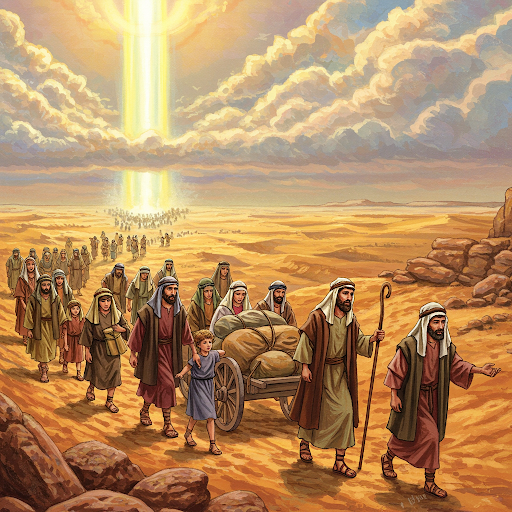
I love seeing archaeology that confirms the Bible! One of my favorite channels for this is Expedition Bible on YouTube. This channel follows Joel Kramer. He visits many archaeological sites. Joel does a wonderful job of connecting the Biblical significance of what has been found.
In this video, Joel goes to Egypt to explore and record the tomb of Pharaoh Amenhotep II and his son Webensenu. If you remember from the Bible, the Pharaoh during the Exodus faces multiple plagues. God brings these down at Moses’ command. This video shows strong evidence for the plagues. It also confirms the Biblical account in both timing and details.
Here is a summary of some of the elements from the video. I really hope you take time to watch it and follow the Expedition Bible channel on YouTube!
Highlights from the video and time references:
- Discovery of the Tomb: French archaeologist Victor Loret discovered the tomb of Amenhotep II in 1898 [00:44].
- Significant Findings: Loret’s findings included the mummy of Amenhotep II, funerary statuettes, and the mummy of a young boy believed to be Royal Prince Webonsenu [02:04].
- Biblical Connections: The presenter connects these findings to the Exodus account:
- Exodus 12: The death of the firstborn son, potentially aligning with Webensenu’s death [15:13], [15:59].
- Exodus 9:10: The plague of boils, noted as unusual sores on Amenhotep II’s mummy [16:15], [16:36].
- Exodus 14:23, 14:28 & Psalm 136:15: The presenter discusses the Pharaoh’s death, noting the Bible doesn’t explicitly say he drowned, but was “overthrown” [17:32], [18:33].
- Biblical Timeline: Using 1 Kings 6:1, the Exodus is placed around 1446 BC, aligning with Amenhotep II’s reign [19:18], [20:50].
- Thutmose III: Exodus 2 and Acts 7:30 suggest a 40-year period aligning with the reign of Thutmose III, Amenhotep II’s father [21:35], [22:07].
 Biblical Logos Blog
Leave a comment